
Custom automations: from the process someone does by hand to the flow that runs on its own around the clock
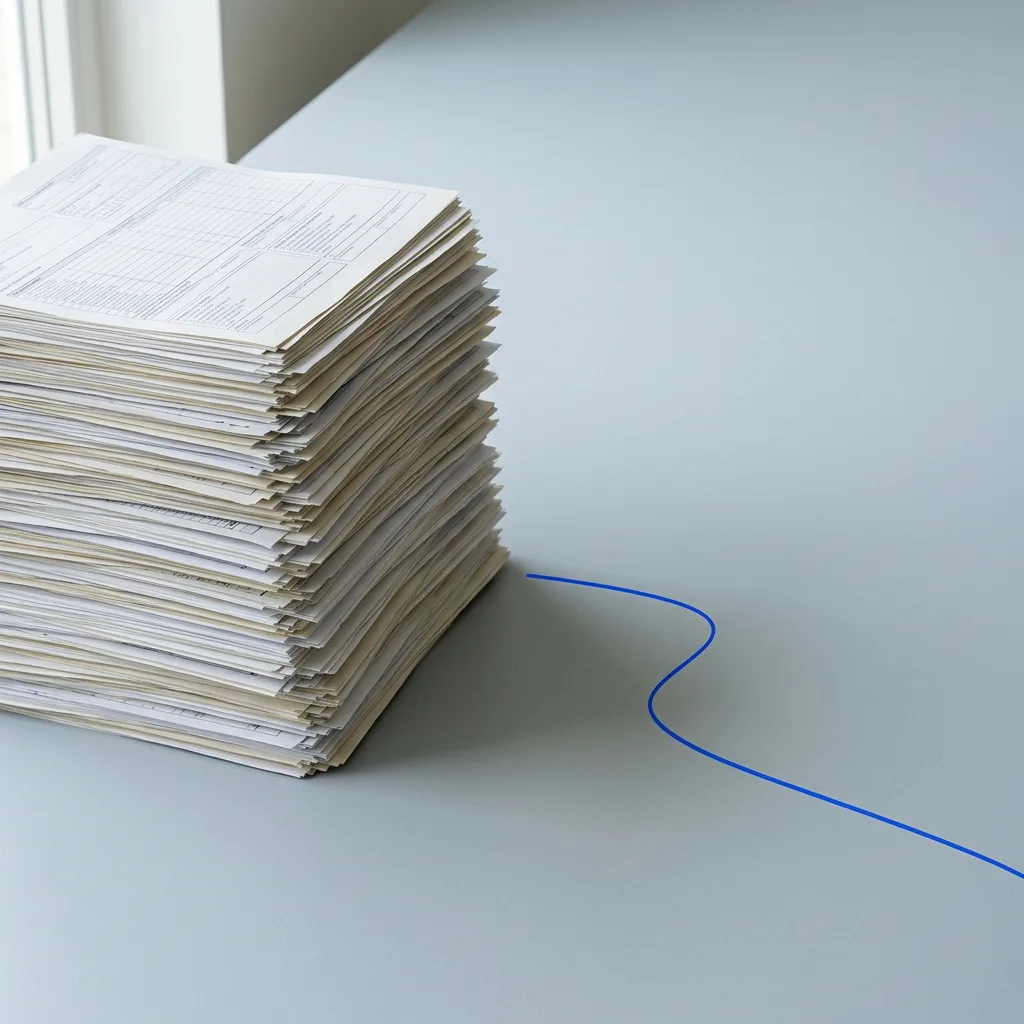
We're reinforcing our process automation service: we connect the tools you already use and build workflows that run on their own. Follow-ups, reports, email sorting, data syncing between systems… repetitive work stops eating into your team's hours. This isn't about replacing the way you work, it's about taking off their hands the tasks that always get done the same way, with no judgment or room for decisions, and that still eat up attention every day.
The invisible work that holds you back
Every company carries around dozens of microtasks that nobody notices but that add up to hours every week: copying data from one tool to another, sending the same email as always, putting together Monday's report. Each one seems small; together, they're a full employee dedicated to copying and pasting.
The problem isn't just the time. It's that manual work is fragile: a follow-up gets forgotten, a figure gets typed wrong, an important email goes unanswered because it arrived at a bad moment. When a process depends on a person remembering to do it, sooner or later it fails. And it usually fails exactly when you're most stretched thin.
Those tasks are the first candidates for automation. They don't require creativity or judgment, just consistency, and that's exactly what a machine does best: repeating the same step, without getting tired, without getting distracted, and at the same time every day.
How we identify what to automate
Before touching anything, we listen. We sit down with you to look at how you actually work and look for tasks that meet three conditions: they happen frequently, they follow clear rules and they're currently done by hand. That's automation's sweet spot, where the savings are highest and the risk is minimal.
- Frequency: something that happens daily or several times a week, not once a year.
- Clear rules: if you can explain the process with an "if this happens, do that", it can be automated.
- Little human judgment: the less subjective judgment required, the cleaner the workflow turns out.
- Data that already exists: we work with the information you already have in your tools, without asking you to switch systems.
Whatever doesn't meet those conditions stays in your team's hands, which is where it belongs. Automating isn't about putting a machine into everything, it's about choosing carefully where it adds value.
Built for you, not from a template
Every automation is designed around your actual process, tested in a controlled environment and monitored once it's live. We don't sell generic templates: we start from how you work today and leave it running reliably, with alerts if something fails.
The difference between a template automation and a custom one shows up over time. The generic one works until your case strays slightly from the mold; then it breaks or forces you to change to fit it. The one built around your process adapts to your exceptions, your field names and your business rules, the ones only you know because you've spent years in your field.
How it works, step by step
We work in short phases so you see results early, with checkpoints along the way. We don't disappear for a month and come back with something already closed: we move forward with you watching.
- We map the process: we document how it's done today, step by step, and where time gets lost.
- We design the flow: we define what triggers the automation, what it does at each step and what tools it connects.
- We connect your tools: we link your email, your CRM, your spreadsheets or your invoicing through their official integrations.
- We test in a controlled environment: we run it with test data until it behaves correctly in both normal and edge cases.
- We launch with monitoring: the flow goes live with active alerts, so if something fails you find out right away, not weeks later.
And we always keep the same principle that guides everything we do: the machine is a copilot, not an autopilot. For sensitive actions (sending something to a client, moving money, deleting records) the flow can pause to wait for human approval. You decide what happens on its own and what passes through your hands before it executes.
An example to make it concrete
Imagine an accounting firm that receives dozens of client invoices by email every month. Today, someone downloads them one by one, renames them, saves them in the client's folder and enters the data into a spreadsheet. It's slow, tedious work, and easy to get wrong.
With a custom flow, that same process happens on its own: when an email with an invoice attached arrives, the system detects it, extracts the key data, files it in the right folder and updates the spreadsheet. If it finds something questionable (an amount that doesn't add up, a client it doesn't recognize), instead of pressing on blindly, it alerts a person to review it. The team goes from typing to supervising, and only steps in when it's truly needed.
This is a hypothetical example, but the pattern repeats in almost any business: receive, sort, record and alert. The data and the tools change; the underlying logic is the same.
Reliable, measurable and with your data safe
An automation is only useful if you can trust it. That's why every flow is monitored and leaves a record of what it does: what ran, when and with what result. If something goes wrong, there's a trail that lets you understand what happened and fix it, instead of guessing.
That same record gives you something manual work rarely offers: visibility. You can measure how many times a process ran, how much time it saves and where it gets stuck. Everything is measurable, and what gets measured can be improved. We also put privacy first: your data is handled within the European Union and only moves between the tools you authorize.
Your team, freed up
While the flow handles the repetitive part, your team gets back hours for what truly adds value: thinking, deciding, taking good care of each customer. Automation doesn't lay anyone off; it gives your people back the time that today goes into copying and pasting. It's the same philosophy we apply to everything we build: technology does the heavy lifting and people do the work that matters.
Tell us which process steals the most time from you at Process Automation.